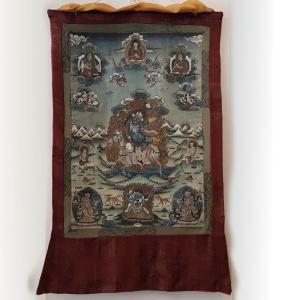






Large Kamasan Balinese Tabing Early XX
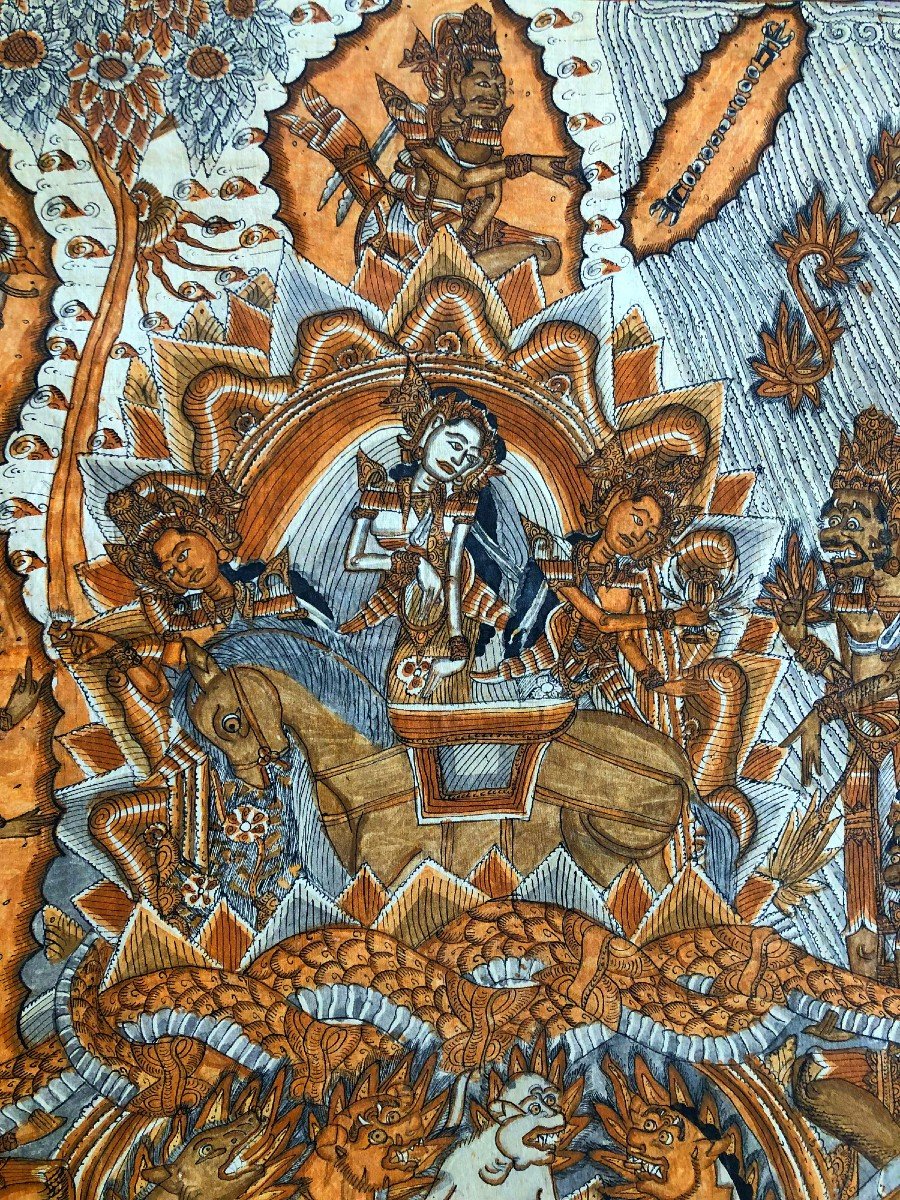
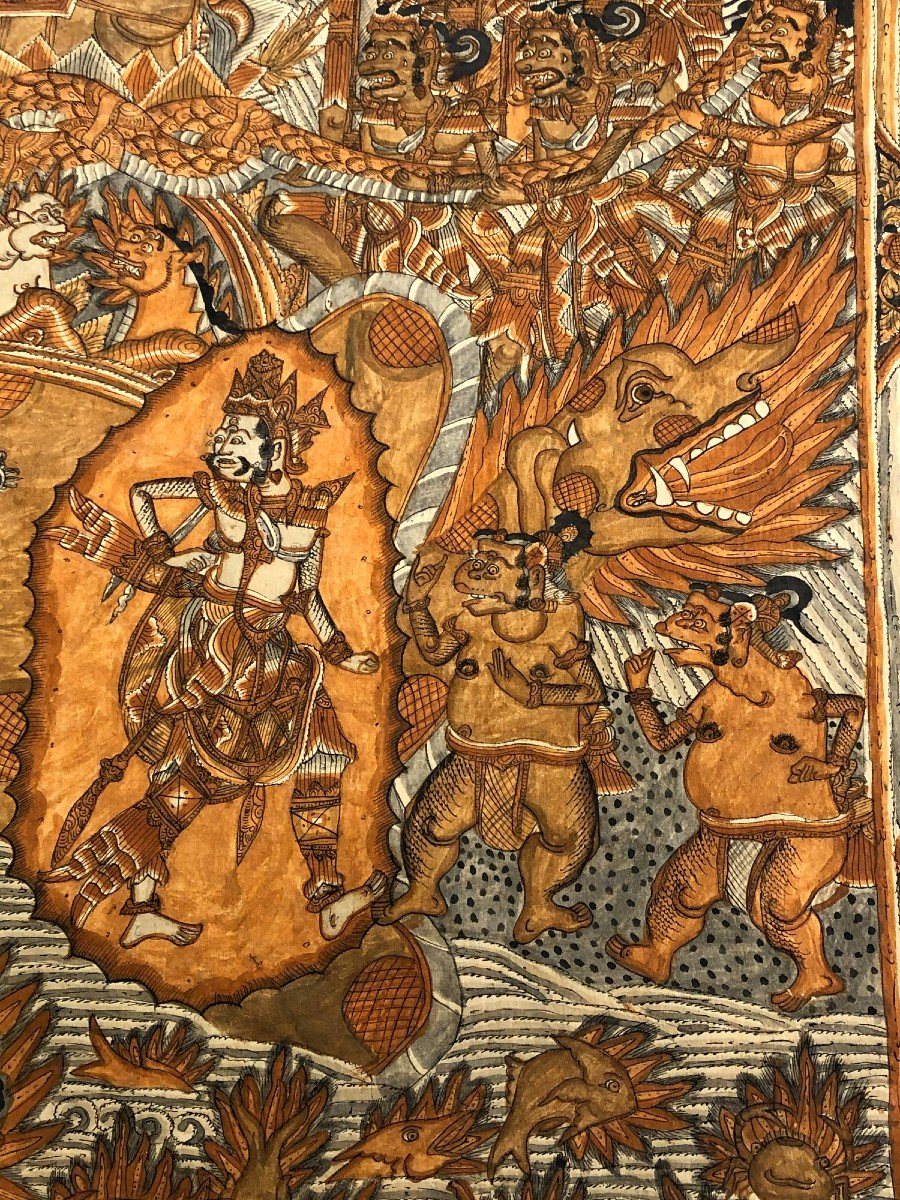
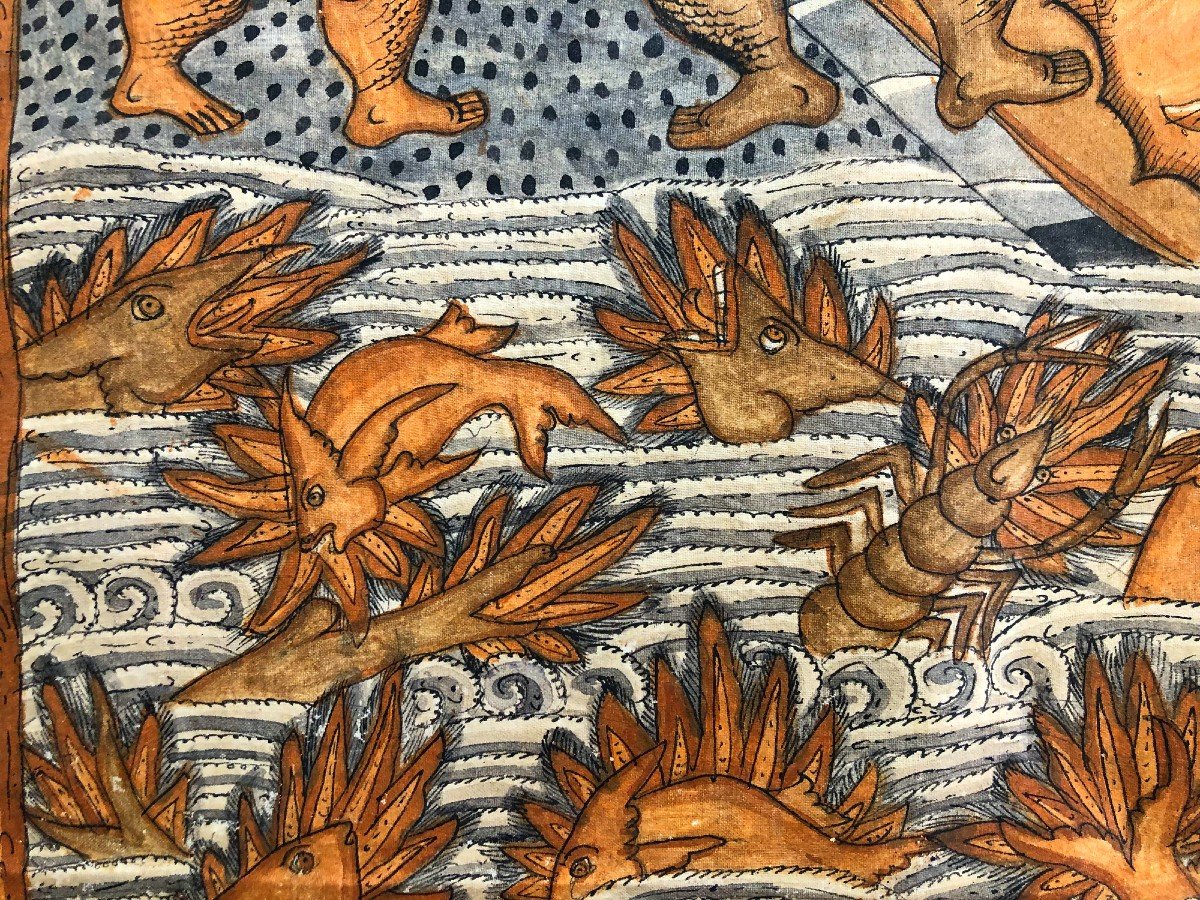
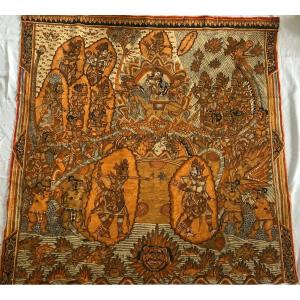
Large Kamasan Balinese Tabing painting from the beginning of the 20th century representing the portage of Antaboga, the world serpent of traditional pre-Islamic Javanese mythology (before the era of the Demak kingdom). It is a derivative of Shiva-Hinduism Ananta Shesha combined with Javanism. After the fall of the Majapahit kingdom and the rise of Islam in Java, the center of Hinduism shifted to Bali.
The origins of Balinese art, also known as Hindu-Javanese art dates back to the earliest times. At first, the Hindu-Buddhist culture adopted from the Indians played a strong influence on the history of the island, along with the Chinese culture. Then, in the 14th century, when the island was ruled under the Majapahit Empire, it was introduced to Javanese culture. But instead of adopting Javanese culture as a whole, Bali integrated it into its local culture, developing what we call Hindu-Javanese art. One of the outstanding works of this era is the Kamasan painting. It visually narrates Hindu-Javanese epics like Ramayana and Mahabharata.
The origins of Balinese art, also known as Hindu-Javanese art dates back to the earliest times. At first, the Hindu-Buddhist culture adopted from the Indians played a strong influence on the history of the island, along with the Chinese culture. Then, in the 14th century, when the island was ruled under the Majapahit Empire, it was introduced to Javanese culture. But instead of adopting Javanese culture as a whole, Bali integrated it into its local culture, developing what we call Hindu-Javanese art. One of the outstanding works of this era is the Kamasan painting. It visually narrates Hindu-Javanese epics like Ramayana and Mahabharata.
650 €
Period: 20th century
Style: Asian art
Condition: Perfect condition
Material: Linen
Length: 137 cm
Width: 128 cm
Reference (ID): 1171581
Availability: In stock
Print