



Antique Figurine ‘daruma Monk’ By Satsuma, Japan, Edo Period
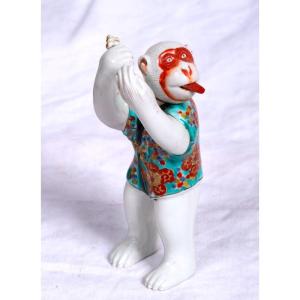
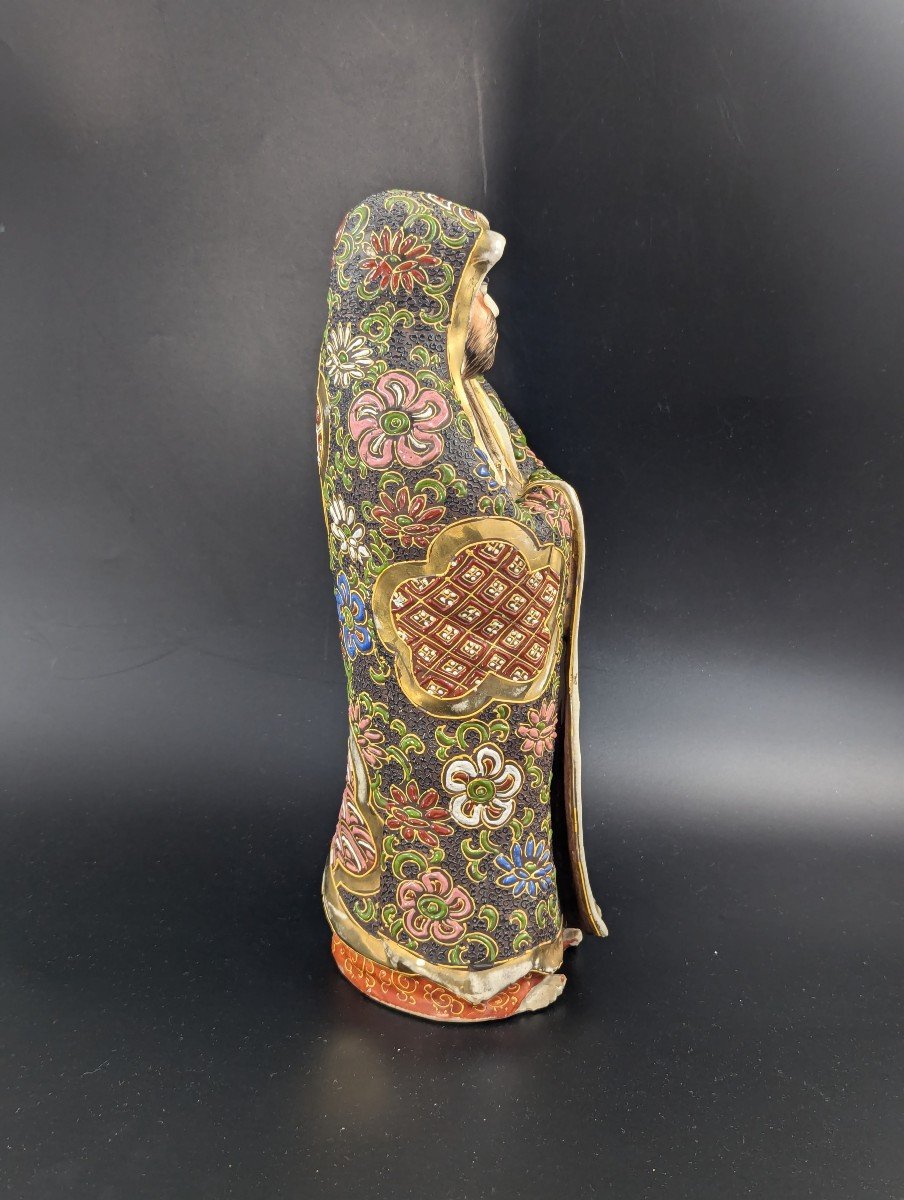
This antique earthenware figurine of a Daruma Monk, crafted by the Satsuma company during the Edo period, depicts a bearded man with furrowed eyebrows and an intense expression, wrapped in a colorful robe. The hand-painted figurine is renowned for its intricate floral designs and is adorned with complex, gilded patterns. Daruma is the Japanese abbreviation for Bodhidharma, the founder of the Zen Buddhist school. In Japan, he is revered as the legendary Great Teacher who pioneered self-improvement, emphasizing the strengthening of body and mind. Traditionally regarded as a master of meditation and the first instructor of martial arts, he is also celebrated as a tireless missionary who brought Buddhism from India to China and ultimately to Japan in the 5th century.
The figure portrays Daruma as a stern preacher, a monk fervent in his faith, captured in a moment of his journey. One of the more bizarre legends about Daruma is that after falling asleep during the seventh year of a nine-year meditation, he cut off his eyelids to prevent further sleep. According to legend, where his eyelids fell to the ground, the first tea plants sprouted, aiding his disciples in staying awake. This story is among the most popular origin tales for the tea plant in both China and Japan. While Chinese depictions of Daruma (Bodhidharma) are typically respectful, Japanese portrayals often present him as a humorous caricature, sometimes with bizarre, distorted expressions and even with rats nibbling at his toes. He is sometimes depicted entangled in cobwebs or stretching as if awakening from a long sleep. Despite these comical portrayals, he remains immensely popular in Japan, where the Daruma doll serves as a good luck talisman, particularly beloved by babies and infants. "Yukidaruma" translates to "Snow Daruma" in Japan, referring to snowmen.
Dimensions:
Height: 29 cm
Width: 11 cm
Depth: 11.5 cm
Weight: 1206 grams
Condition:
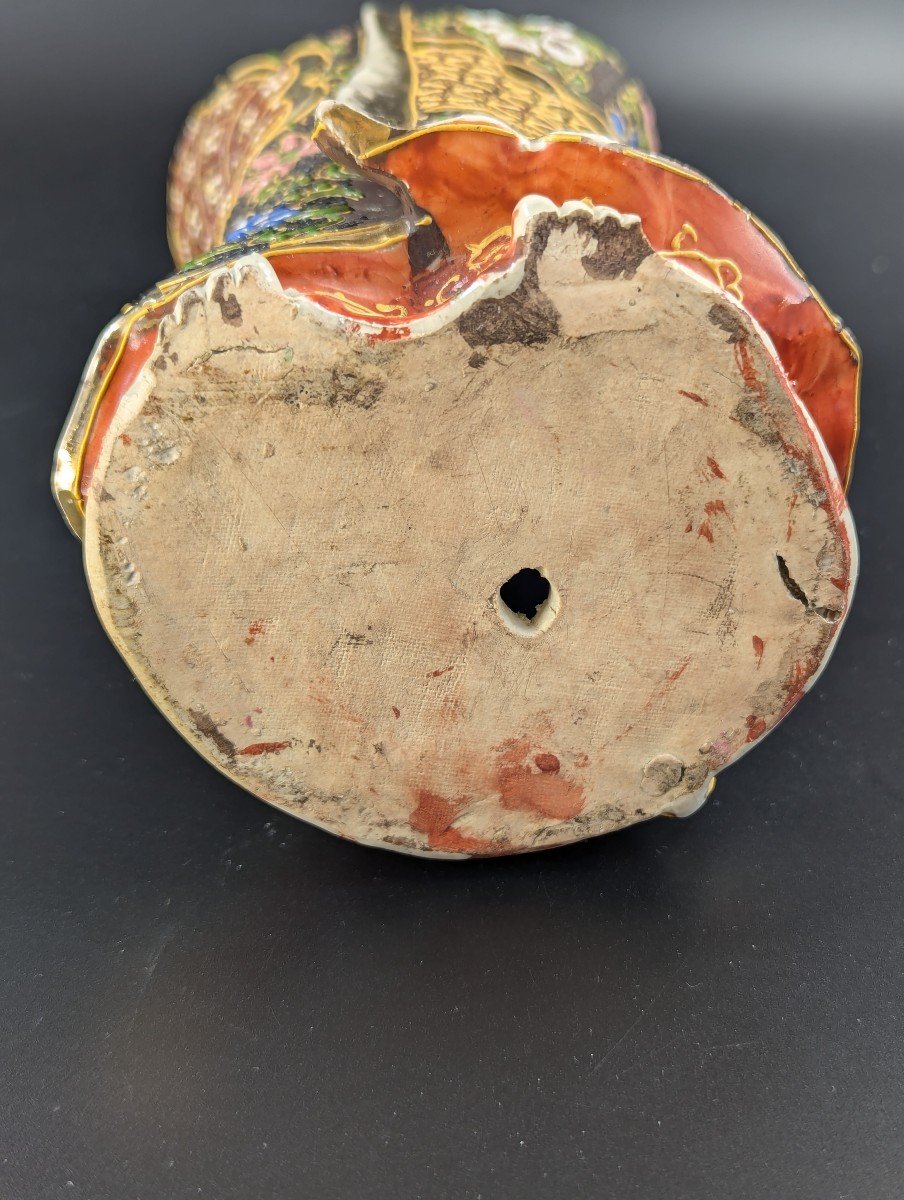
Notable for chipping on the toes of the left foot, some loss of gilding, and minor paint loss. Otherwise, it is in excellent antique condition.
Please study the accompanying photographs carefully, as they form an integral part of this description. The item will be shipped with full tracking and insurance. Please note that shipping costs include labor, packaging, and postage.
The figure portrays Daruma as a stern preacher, a monk fervent in his faith, captured in a moment of his journey. One of the more bizarre legends about Daruma is that after falling asleep during the seventh year of a nine-year meditation, he cut off his eyelids to prevent further sleep. According to legend, where his eyelids fell to the ground, the first tea plants sprouted, aiding his disciples in staying awake. This story is among the most popular origin tales for the tea plant in both China and Japan. While Chinese depictions of Daruma (Bodhidharma) are typically respectful, Japanese portrayals often present him as a humorous caricature, sometimes with bizarre, distorted expressions and even with rats nibbling at his toes. He is sometimes depicted entangled in cobwebs or stretching as if awakening from a long sleep. Despite these comical portrayals, he remains immensely popular in Japan, where the Daruma doll serves as a good luck talisman, particularly beloved by babies and infants. "Yukidaruma" translates to "Snow Daruma" in Japan, referring to snowmen.
Dimensions:
Height: 29 cm
Width: 11 cm
Depth: 11.5 cm
Weight: 1206 grams
Condition:
Notable for chipping on the toes of the left foot, some loss of gilding, and minor paint loss. Otherwise, it is in excellent antique condition.
Please study the accompanying photographs carefully, as they form an integral part of this description. The item will be shipped with full tracking and insurance. Please note that shipping costs include labor, packaging, and postage.
700 €
Period: 18th century
Style: Asian art
Condition: Excellent condition
Material: Porcelain
Reference (ID): 1397473
Availability: In stock
Print