THIS OBJECT WAS SOLD
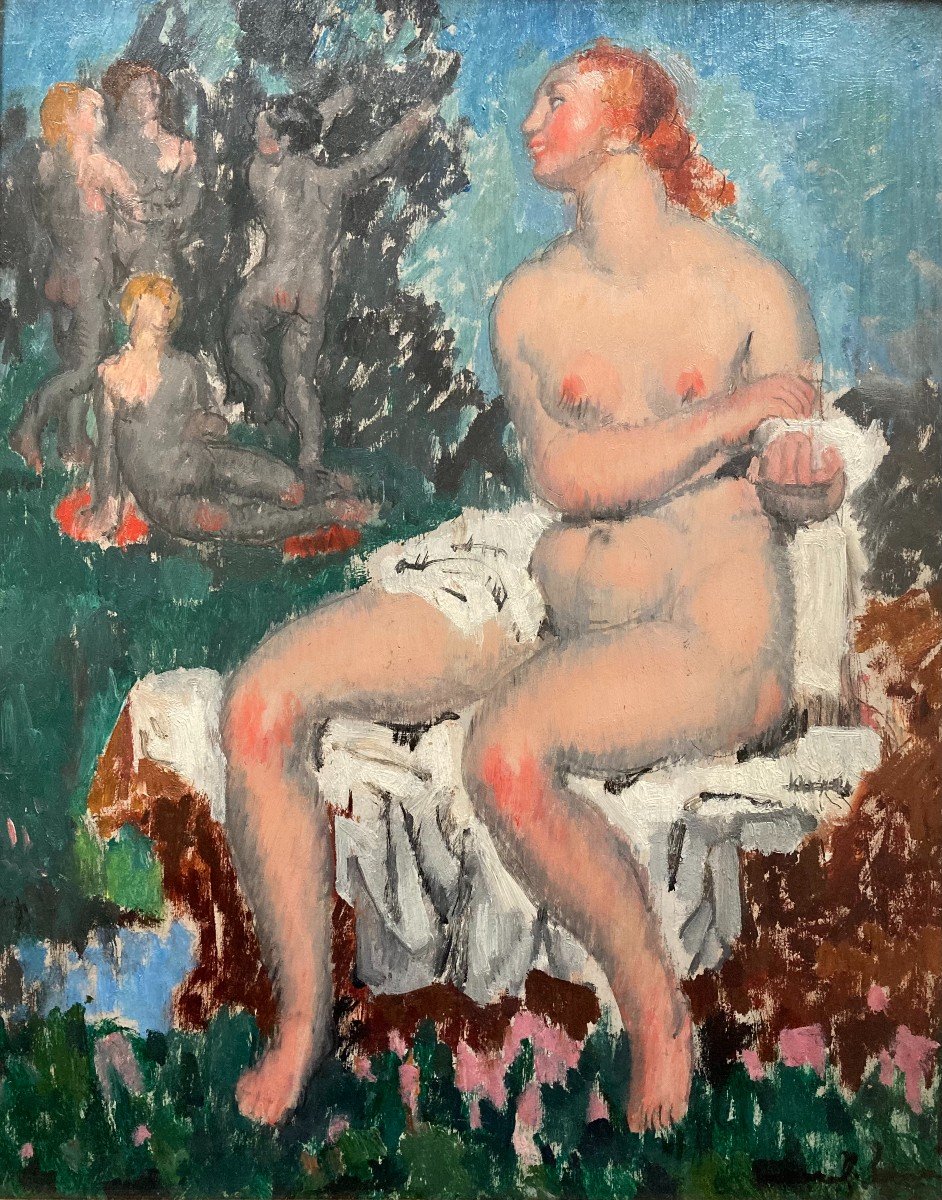
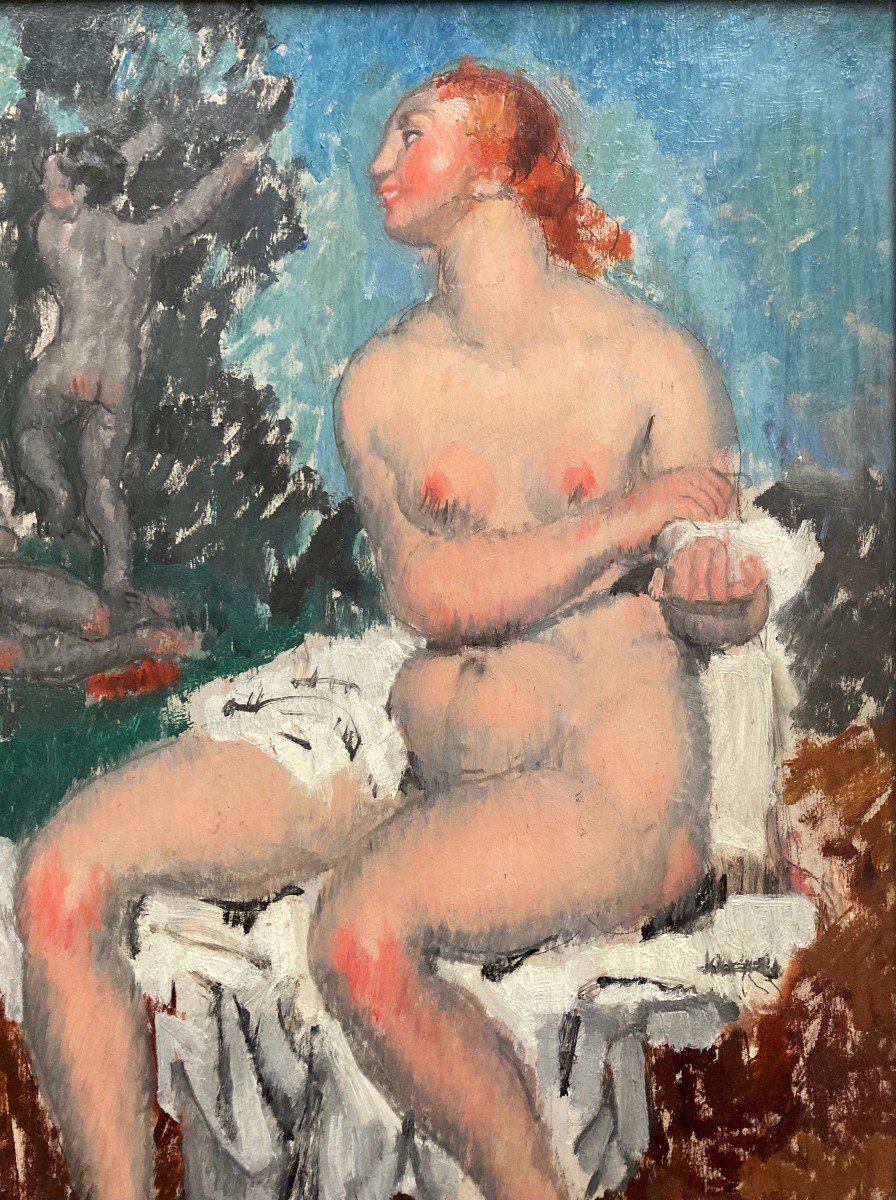
Marcel Lenoir (1872-1931). Woman And Children In Nature, Around 1925. Oil On Panel, Signed



Marcel Lenoir (1872-1931)
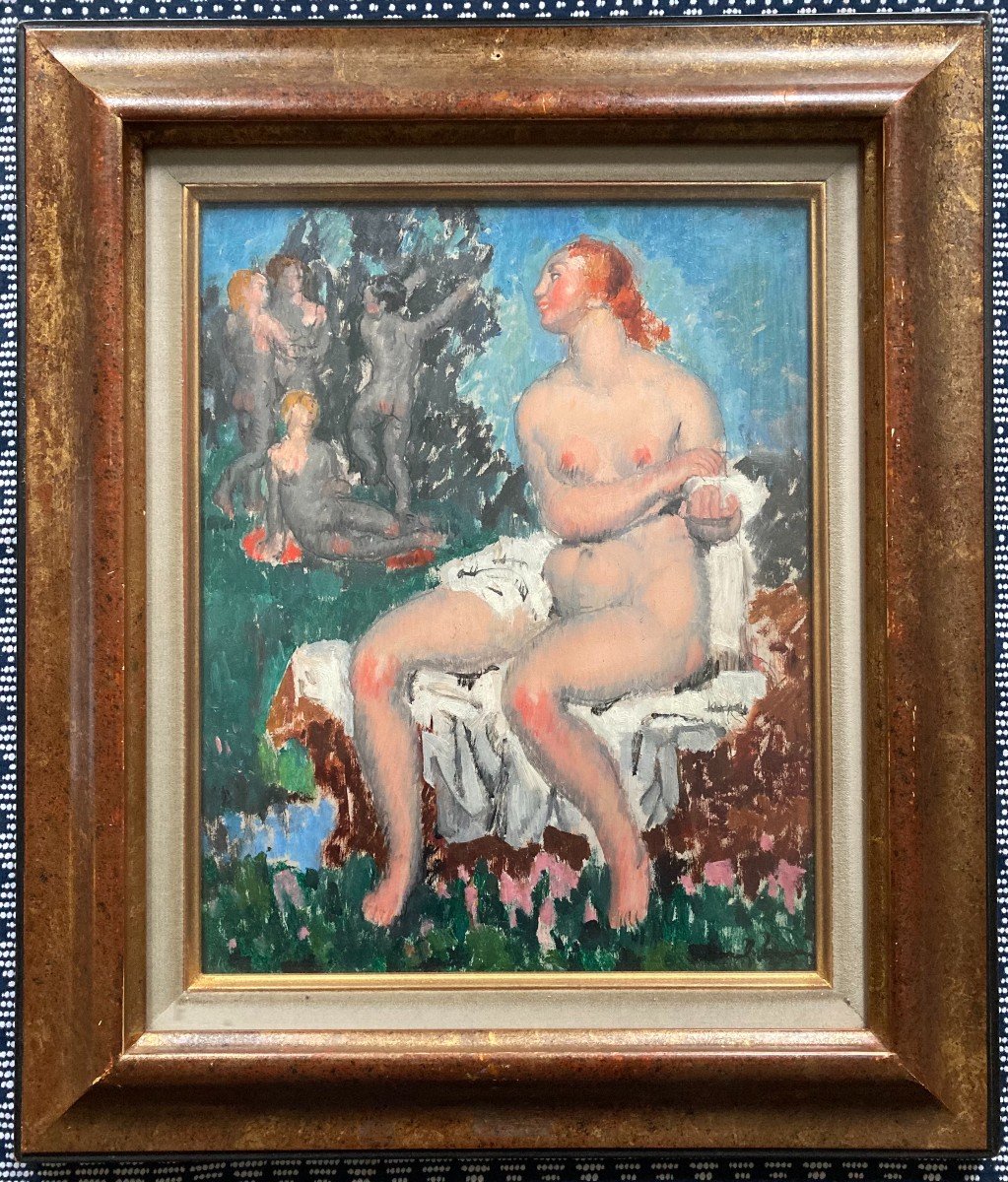
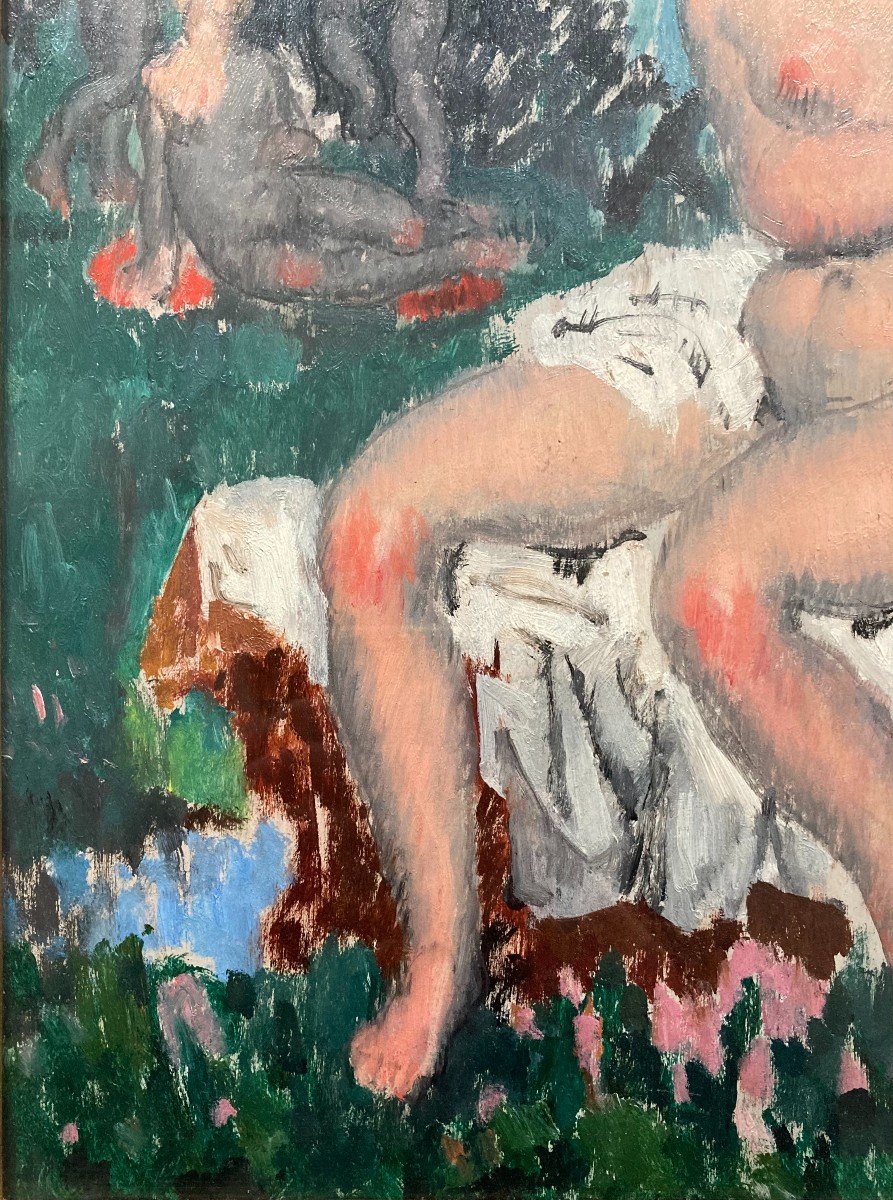
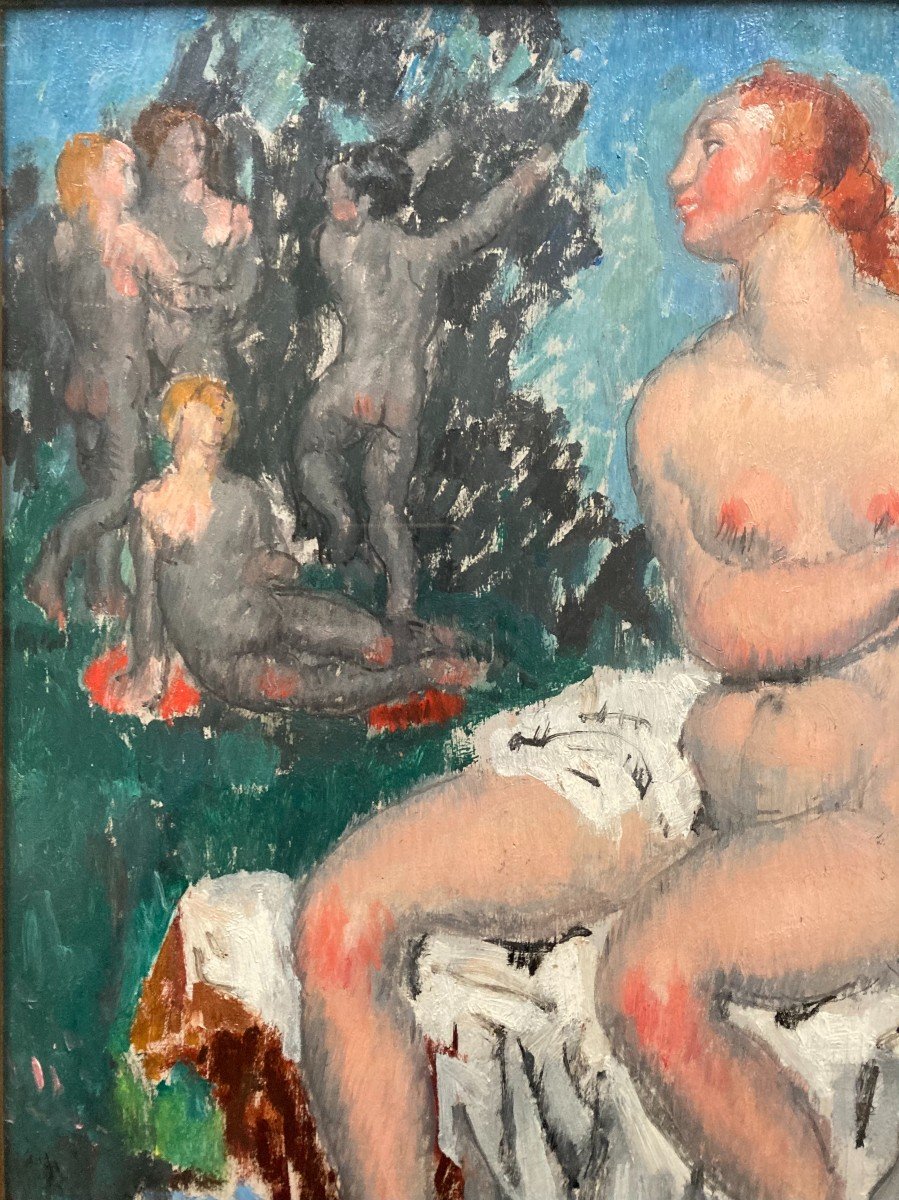
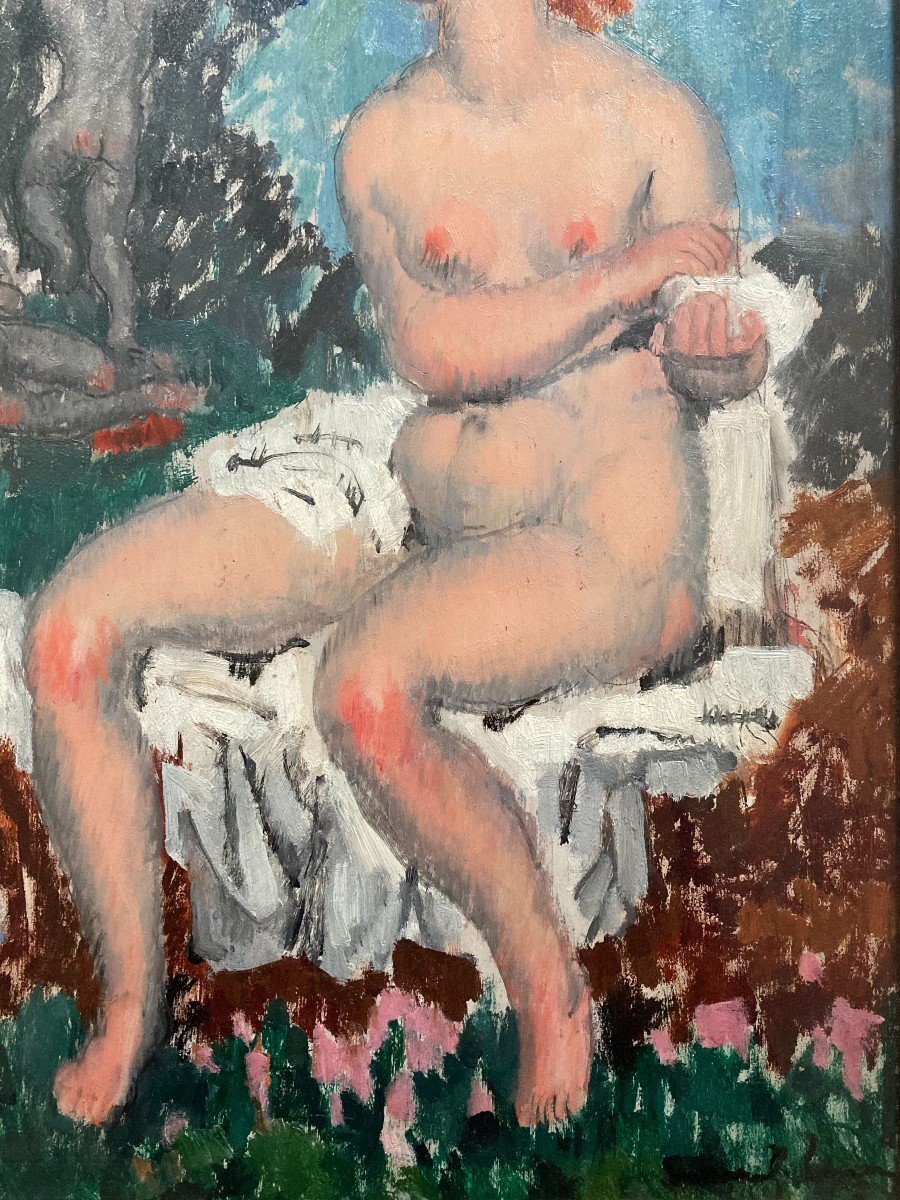
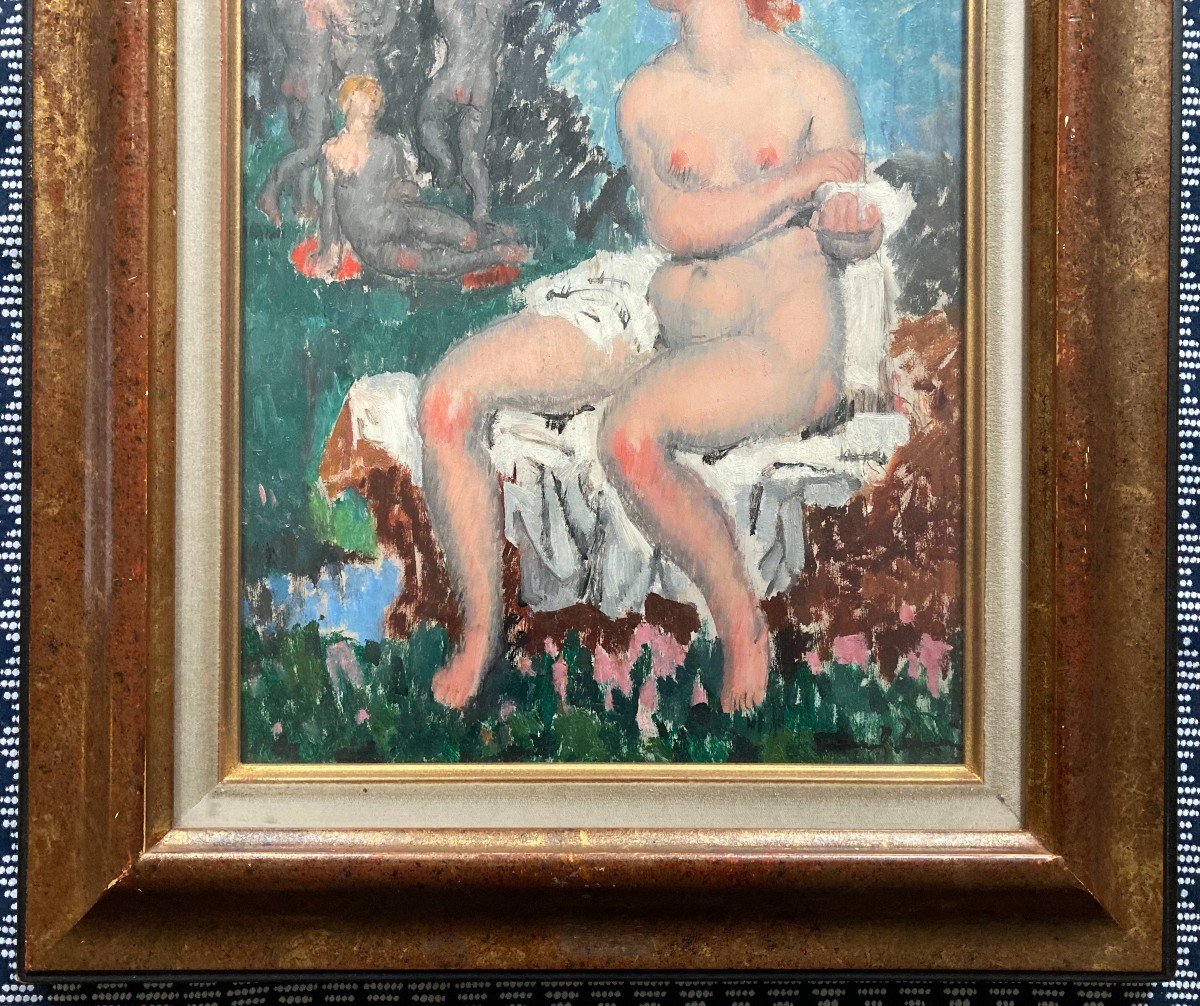
Woman and children in nature, circa 1925
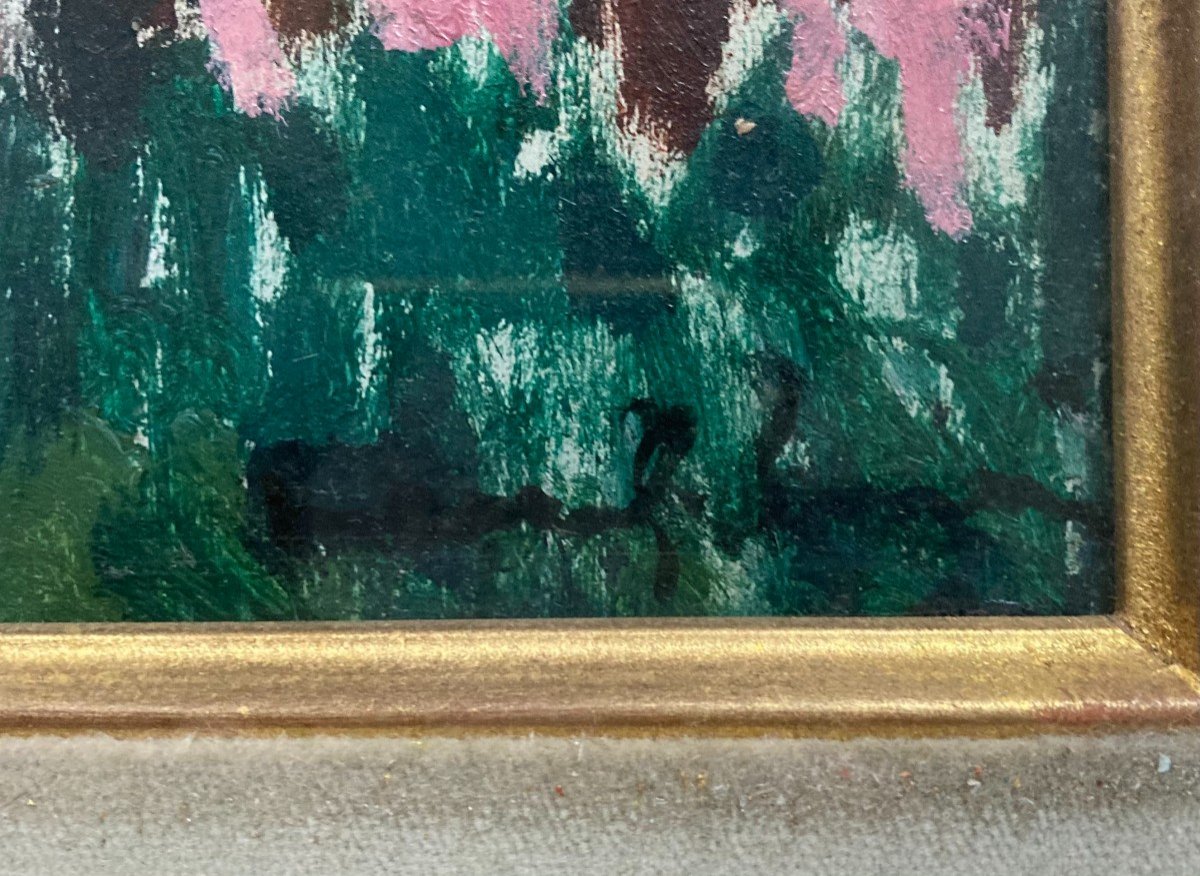
Oil on panel, signed lower right
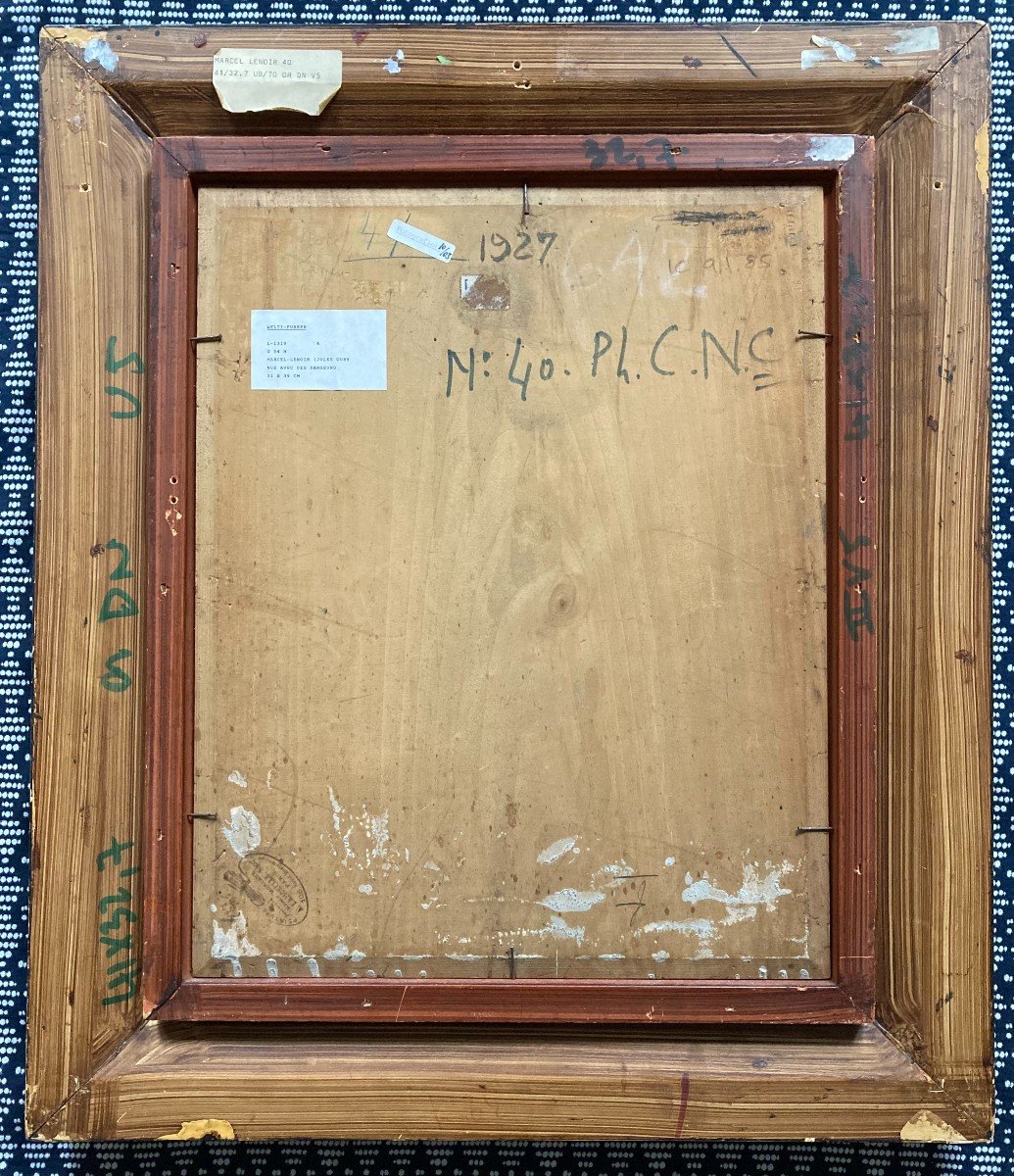
Work: H. 41 cm W. 32.5 cm
Frame: H. 57.5 cm - L. 49, 5 cm
Good condition
Born into a family of goldsmiths, Marcel-Lenoir went to Paris in 1889. There he attended the School of Decorative Arts, and the courses of fresco artist Paul Baudoüin at the National School of Fine Arts, then discover the artists of the French and Italian Middle Ages at the Cluny museum then at the Louvre museum. Passionate about symbolism, he frequented the poet Paul Fort and the Rose-Croix circles, he discovered at the same time the works of the Swiss Arnold Böcklin, the Englishman Edward Burne-Jones and Pierre Puvis de Chavannes. He abandoned symbolism around 1902-1903 for an inspiration closer to nature: the material of his works becomes more impasto, the colors more vivid, the perspective is gradually deformed, the color is laid flat with an effect of vertical arrangement of the composition, formal daring imagined by the Nabis twenty years earlier. Powerful colourist whose material effects evoke the Beasts, especially in Central Europe. In perpetual search for new stylistic solutions, his work is a search for a golden age that has not ceased to run through French painting since the end of the 19th century.
Having achieved notoriety during his lifetime, he is today one of these neglected artists, it is true that his uncompromising attitude and even provocative to the point of excess will not favor its dissemination. Practicing material austerity and even indigence in his personal life with sincerity, he never ceased to mock critics and official institutions.
An eccentric character walking in Montparnasse a silhouette of Christ for an artistic cabaret, he was of an ambition beyond his strength and haunted by inaccessible grandeur.
In 1908, appeared in the presses of the Abbey of Créteil, a work entitled Reason or unreason of the painter Marcel-Lenoir; no doubt he frequented this artistic phalanstery. In 1913, he moved to Bruniquel, renting a barn, set up a team of six masons to work on his large-scale frescoes. He produced 27 frescoes there during the year 1916.He changed his technique and the composition of his mortar which gave his work a great softness in tones.
In 1919-1920, Marcel-Lenoir founded the “Institute of contemporary aesthetics” in his studio at no 115 rue Notre-Dame-des-Champs in Paris and produced an exhibition-manifesto there the following year, publishing a catalog showing her portrait by Chana Orloff on the cover. He transferred this workshop to 86 on the same street in 1928, right next to Fernand Léger's one. He taught the art of fresco there and entrusted that of engraving to Paul Bornet. Many creators will receive quality education there, such as Pierre Claude Dubois, Jean Charlot who will export his knowledge as a fresco artist to Mexico, the Yugoslav Licenoski-Lasar, the Croats Jozo Kljakovic and Ivo Resek, the Brazilian Antonio Gomide.
In 1920, he received the order for the Coronation of the Virgin (1923) for the Catholic Institute of Toulouse, on which he worked with his students. He incorporates a series of portraits of the city's notables, as well as his own portrait and those of his wife and son. Monsignor Germain Breton is represented there as a priest, leading the procession. Other personalities of Toulouse or of his acquaintances like Camille Soula, Count Henri Bégouen, Henri de Lingua de Saint-Blanquat or Jacques Adrien Crouzel, appear there.
He died on September 6, 1931 and is buried in the cemetery of Pechcausen. He was married and the father of a family.
The Marcel-Lenoir museum at the Château de Montricoux in Montricoux (Tarn-et-Garonne) preserves an important collection of his work.
Find out more:
Open to negotiations, I am at your entire disposal for any further information.
Do not hesitate to contact me at 06.32.09.74.59 or at the following address thibault.holscher@gmail.com
I will be delighted to present the works to you in Paris by appointment.
Careful and fast shipping everywhere in France and abroad.
Woman and children in nature, circa 1925
Oil on panel, signed lower right
Work: H. 41 cm W. 32.5 cm
Frame: H. 57.5 cm - L. 49, 5 cm
Good condition
Born into a family of goldsmiths, Marcel-Lenoir went to Paris in 1889. There he attended the School of Decorative Arts, and the courses of fresco artist Paul Baudoüin at the National School of Fine Arts, then discover the artists of the French and Italian Middle Ages at the Cluny museum then at the Louvre museum. Passionate about symbolism, he frequented the poet Paul Fort and the Rose-Croix circles, he discovered at the same time the works of the Swiss Arnold Böcklin, the Englishman Edward Burne-Jones and Pierre Puvis de Chavannes. He abandoned symbolism around 1902-1903 for an inspiration closer to nature: the material of his works becomes more impasto, the colors more vivid, the perspective is gradually deformed, the color is laid flat with an effect of vertical arrangement of the composition, formal daring imagined by the Nabis twenty years earlier. Powerful colourist whose material effects evoke the Beasts, especially in Central Europe. In perpetual search for new stylistic solutions, his work is a search for a golden age that has not ceased to run through French painting since the end of the 19th century.
Having achieved notoriety during his lifetime, he is today one of these neglected artists, it is true that his uncompromising attitude and even provocative to the point of excess will not favor its dissemination. Practicing material austerity and even indigence in his personal life with sincerity, he never ceased to mock critics and official institutions.
An eccentric character walking in Montparnasse a silhouette of Christ for an artistic cabaret, he was of an ambition beyond his strength and haunted by inaccessible grandeur.
In 1908, appeared in the presses of the Abbey of Créteil, a work entitled Reason or unreason of the painter Marcel-Lenoir; no doubt he frequented this artistic phalanstery. In 1913, he moved to Bruniquel, renting a barn, set up a team of six masons to work on his large-scale frescoes. He produced 27 frescoes there during the year 1916.He changed his technique and the composition of his mortar which gave his work a great softness in tones.
In 1919-1920, Marcel-Lenoir founded the “Institute of contemporary aesthetics” in his studio at no 115 rue Notre-Dame-des-Champs in Paris and produced an exhibition-manifesto there the following year, publishing a catalog showing her portrait by Chana Orloff on the cover. He transferred this workshop to 86 on the same street in 1928, right next to Fernand Léger's one. He taught the art of fresco there and entrusted that of engraving to Paul Bornet. Many creators will receive quality education there, such as Pierre Claude Dubois, Jean Charlot who will export his knowledge as a fresco artist to Mexico, the Yugoslav Licenoski-Lasar, the Croats Jozo Kljakovic and Ivo Resek, the Brazilian Antonio Gomide.
In 1920, he received the order for the Coronation of the Virgin (1923) for the Catholic Institute of Toulouse, on which he worked with his students. He incorporates a series of portraits of the city's notables, as well as his own portrait and those of his wife and son. Monsignor Germain Breton is represented there as a priest, leading the procession. Other personalities of Toulouse or of his acquaintances like Camille Soula, Count Henri Bégouen, Henri de Lingua de Saint-Blanquat or Jacques Adrien Crouzel, appear there.
He died on September 6, 1931 and is buried in the cemetery of Pechcausen. He was married and the father of a family.
The Marcel-Lenoir museum at the Château de Montricoux in Montricoux (Tarn-et-Garonne) preserves an important collection of his work.
Find out more:
Open to negotiations, I am at your entire disposal for any further information.
Do not hesitate to contact me at 06.32.09.74.59 or at the following address thibault.holscher@gmail.com
I will be delighted to present the works to you in Paris by appointment.
Careful and fast shipping everywhere in France and abroad.
Explore similar pieces and discover your ideal find:
Other Paintings