THIS OBJECT WAS SOLD
15th C Woodcut Sheet With View Of Tivoli From The Nuremberg Chronicle 1493
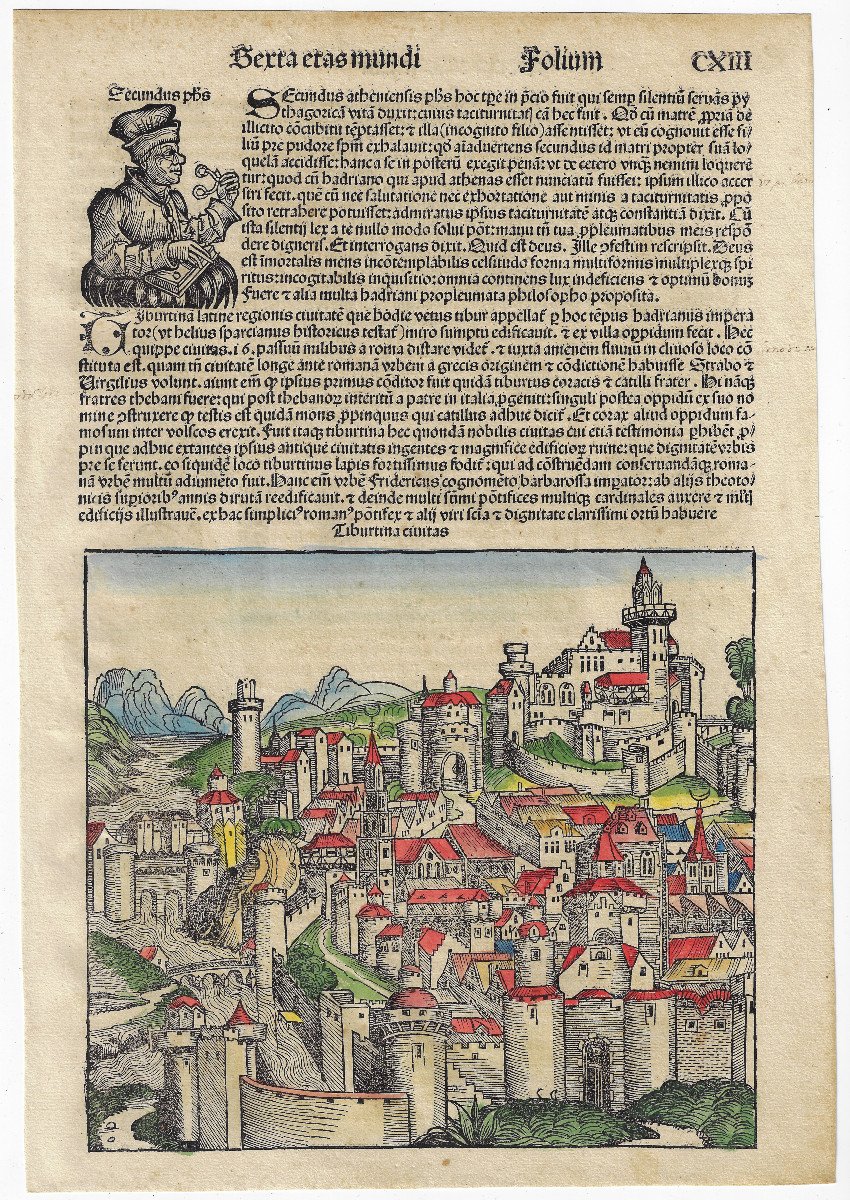

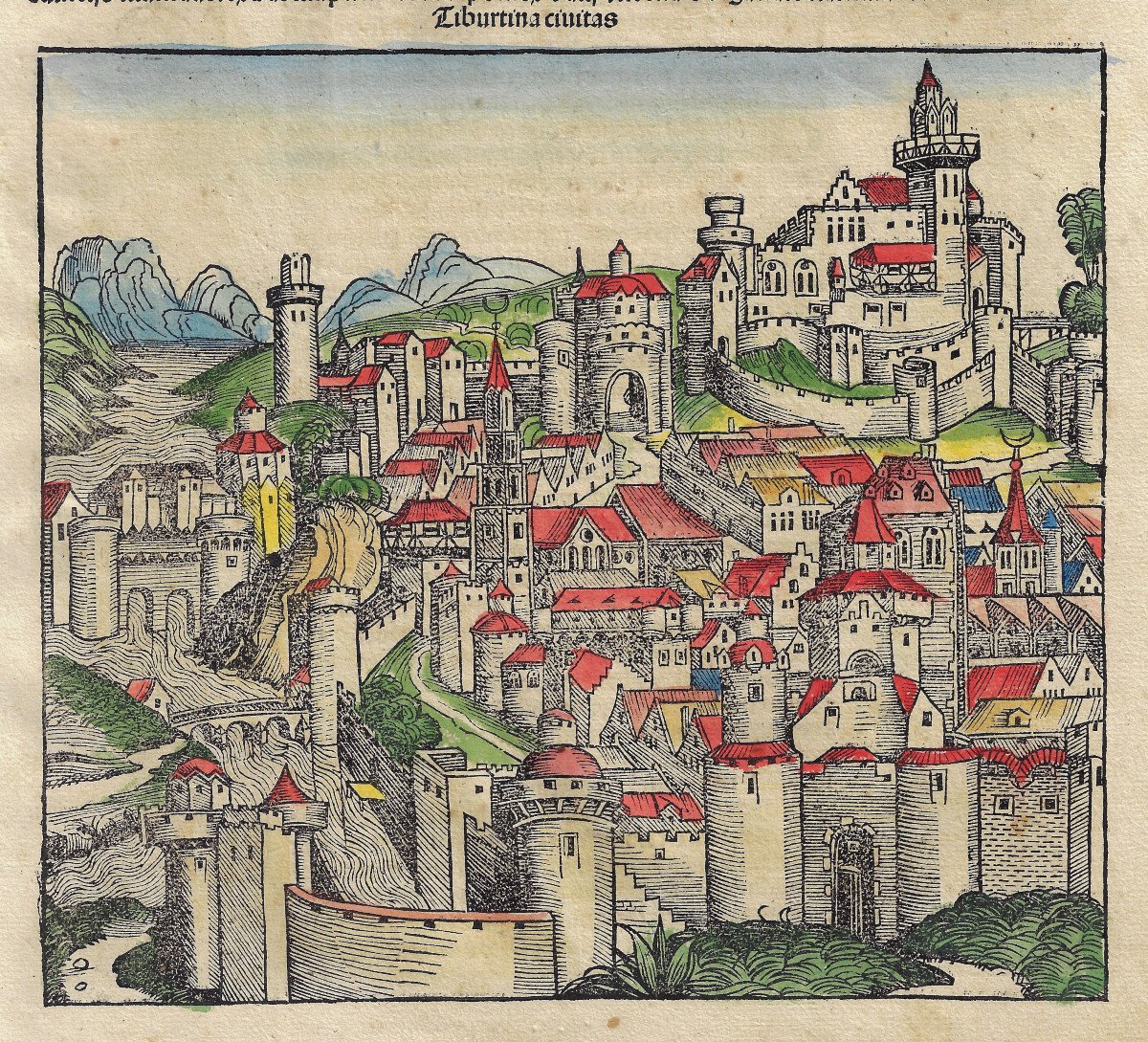

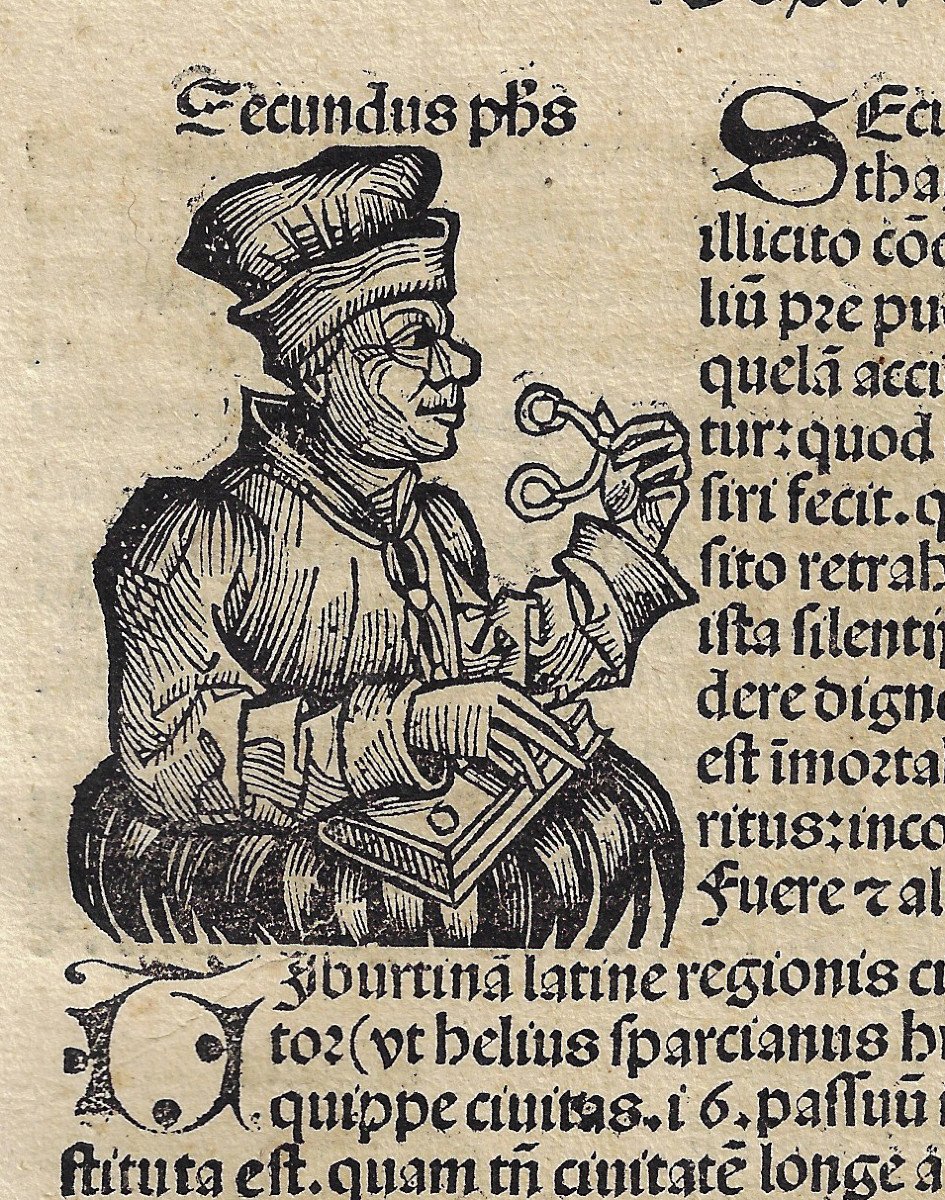


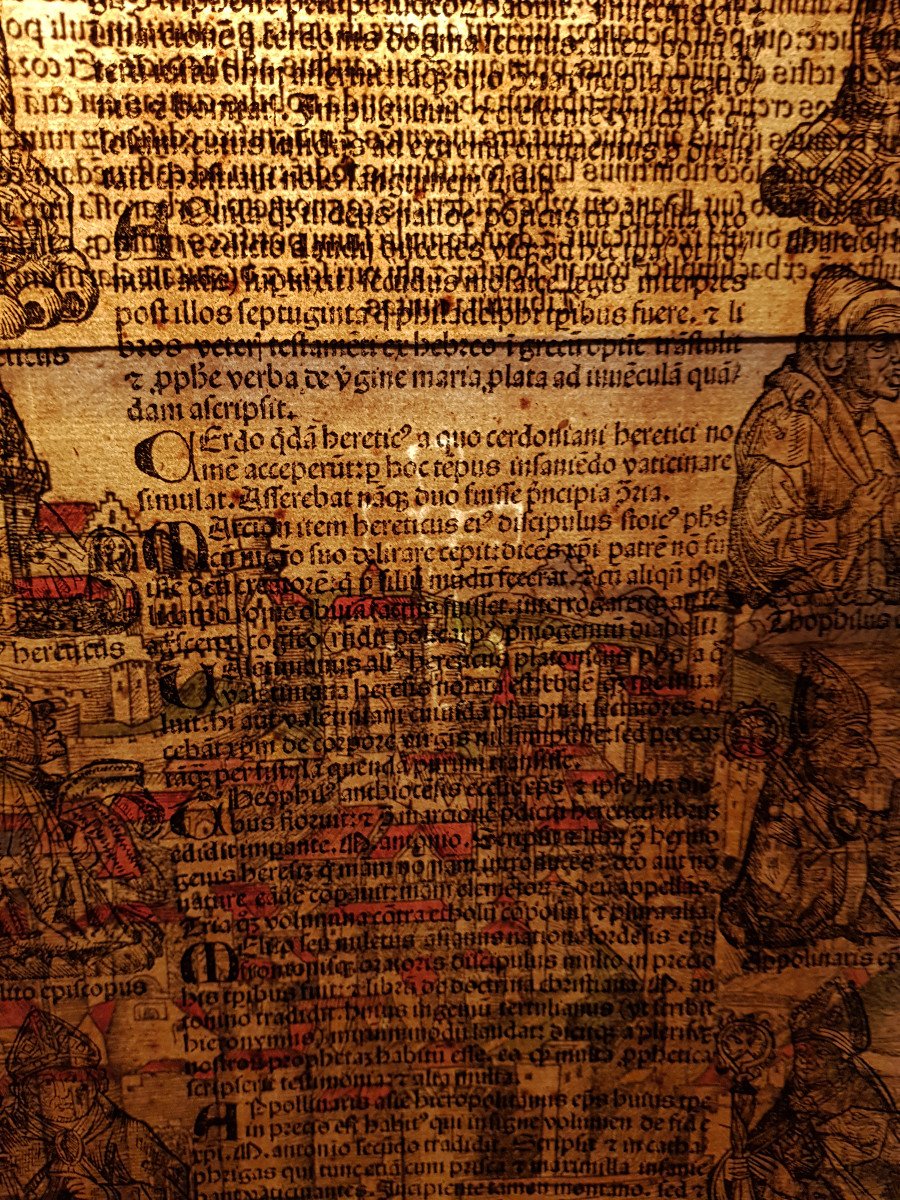

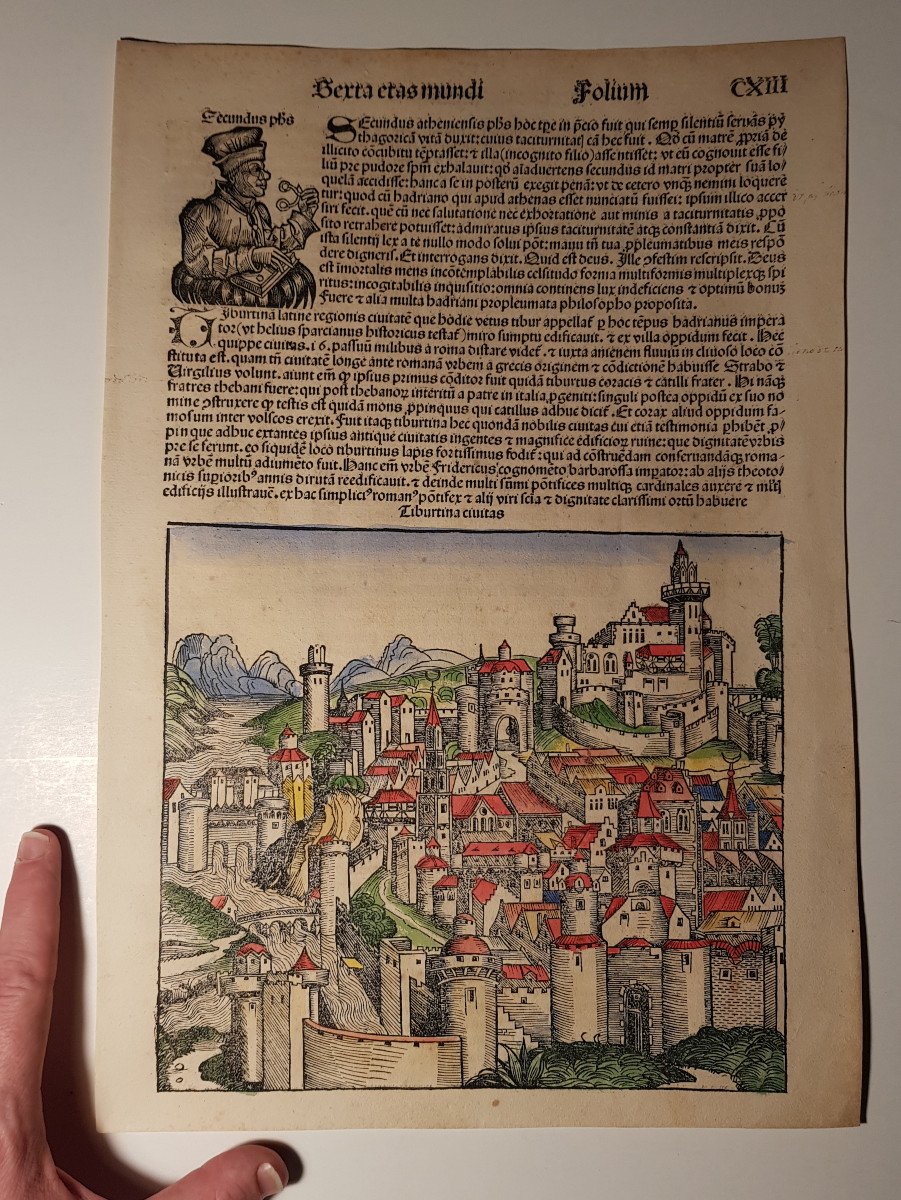


15th-Century Woodcut Leaf with View of Tivoli from Hartmann Schedel’s Nuremberg Chronicle, 1493
Leaf from Hartmann’ Schedel’s Schedelsche Weltchronik, Nuremberg 1493
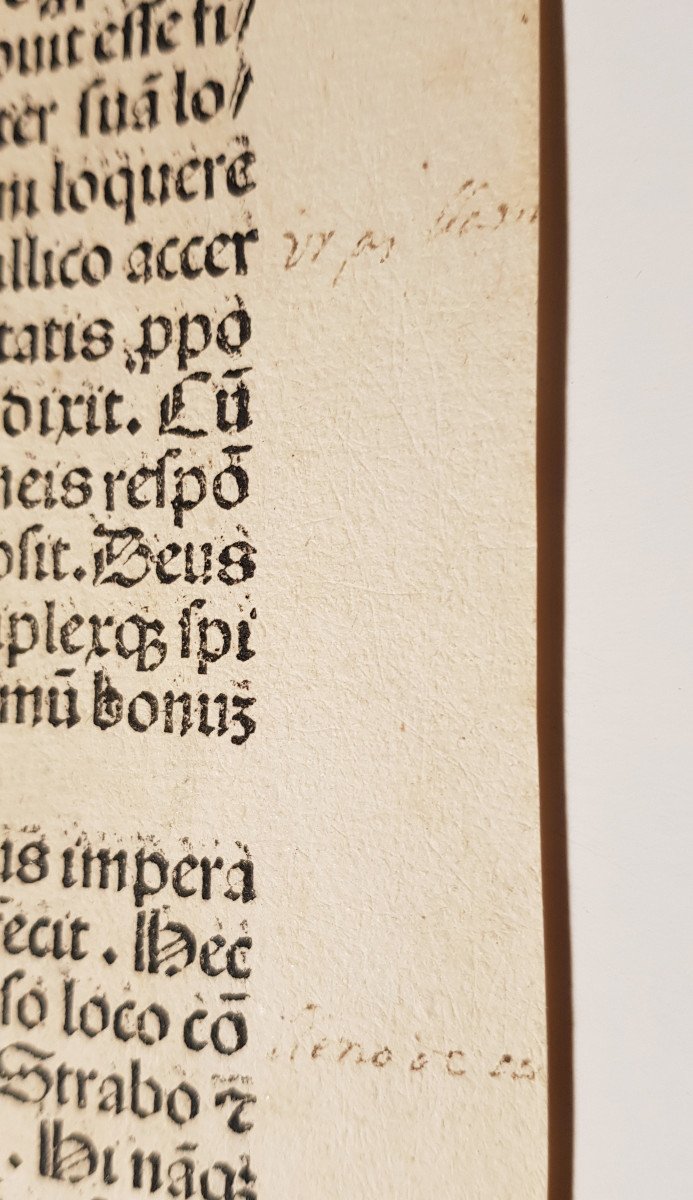
Woodcut on handmade paper, 397 x 273 mm, partly hand-coloured, watermark cross, with some early manuscript annotations
This view by Harmann Schedel comes from the Nuremberg Chronicles, the illustrated history book of the world, known as Liber Chronicarum and Die Schedelsche Weltchronik, one of the most important books printed in 15th century, renowned for the numerous illustrations of the text. Printed in Latin, in Nuremberg, in 1493.
Hartmann Schedel (1440–1514) was a German historian, physician, humanist, and one of the first cartographers to use the printing press. He was born and died in Nuremberg.
Schedel is best known for his writing the text for the Nuremberg Chronicle, known as Schedelsche Weltchronik (English: Schedel's World Chronicle), published in 1493 in Nuremberg. It was commissioned by Sebald Schreyer (1446–1520) and Sebastian Kammermeister (1446–1503).[1] Maps in the Chronicle were the first ever illustrations of many cities and countries.
With the invention of the printing press by Johannes Gutenberg in 1447, it became feasible to print books and maps for a larger customer basis. Because they had to be handwritten, books were previously rare and very expensive.
Schedel was also a notable collector of books, art and old master prints. An album he had bound in 1504, which once contained five engravings by Jacopo de' Barbari, provides important evidence for dating de' Barbari's work.
Shipping in Europe: EUR 15
Leaf from Hartmann’ Schedel’s Schedelsche Weltchronik, Nuremberg 1493
Woodcut on handmade paper, 397 x 273 mm, partly hand-coloured, watermark cross, with some early manuscript annotations
This view by Harmann Schedel comes from the Nuremberg Chronicles, the illustrated history book of the world, known as Liber Chronicarum and Die Schedelsche Weltchronik, one of the most important books printed in 15th century, renowned for the numerous illustrations of the text. Printed in Latin, in Nuremberg, in 1493.
Hartmann Schedel (1440–1514) was a German historian, physician, humanist, and one of the first cartographers to use the printing press. He was born and died in Nuremberg.
Schedel is best known for his writing the text for the Nuremberg Chronicle, known as Schedelsche Weltchronik (English: Schedel's World Chronicle), published in 1493 in Nuremberg. It was commissioned by Sebald Schreyer (1446–1520) and Sebastian Kammermeister (1446–1503).[1] Maps in the Chronicle were the first ever illustrations of many cities and countries.
With the invention of the printing press by Johannes Gutenberg in 1447, it became feasible to print books and maps for a larger customer basis. Because they had to be handwritten, books were previously rare and very expensive.
Schedel was also a notable collector of books, art and old master prints. An album he had bound in 1504, which once contained five engravings by Jacopo de' Barbari, provides important evidence for dating de' Barbari's work.
Shipping in Europe: EUR 15
Explore similar pieces and discover your ideal find:
Prints (Relief, Intaglio)